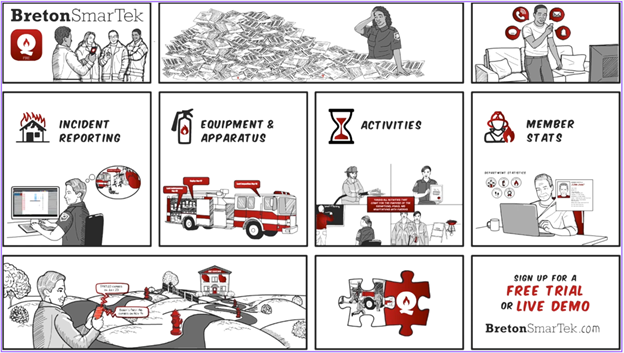
Paperless fire department records management systems let firefighters focus on fighting fire, not filing cabinets.
By simply doing the job with which they are tasked, firefighters and the fire departments they serve generate enormous amounts of information…critically important information. From incident reports and fire inspections to training records and equipment maintenance logs, documentation is critical for operations, safety, and compliance.
For longer than firefighters may want to count, fire departments relied on paper files, spreadsheets, or disconnected systems to manage these records. But…the times they are a changin’. Modern fire services face increasing administrative demands and stricter reporting requirements. As the amount of paper grows, the need for paperless records management for fire departments grows.
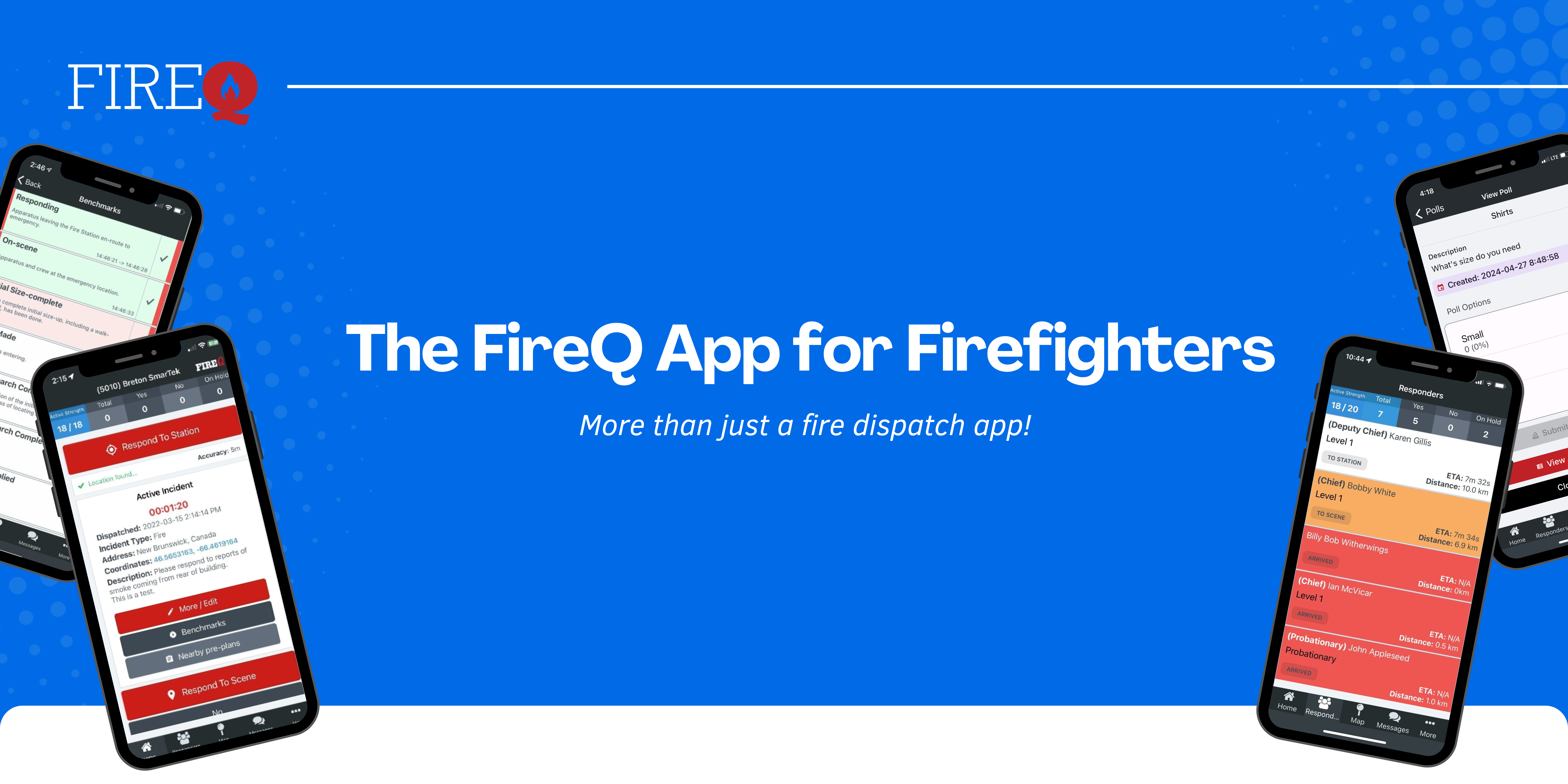
As a result, more fire departments are transitioning to paperless records management systems, designed specifically for fire departments. Systems that allow firefighters to improve efficiency, reduce risk, and gain better control of their data. Modern fire departments require solutions like FireQ that help firefighters collect, manage, and use this fire department data.
The Growing Challenge of Fire Department Documentation
Every call, inspection, and training session generates documentation…thousands of records that must be organized, stored, and accessible when needed.
Consider what typical fire department documentation includes:
- Incident reports.
- Response statistics.
- Fire inspection records.
- Safety plans for community assets.
- Training certifications.
- Equipment tracking and maintenance logs.
- Apparatus tracking and maintenance logs.
- Truck checks.
- Consumables tracking.
- Certification tracking.
- Personnel records.
- Firefighter participation hours.
- Fire department activities.
Then, consider what it looks like when these records are stored on paper or across multiple systems. Managing them becomes ornery…difficult…frustrating. Important information can be misplaced, incomplete, or difficult to find when it’s needed most.
This creates unnecessary stress for firefighters who are increasingly being called upon to provide data and statistics to multiple levels of government and a more diverse array of stakeholders.

Paper Records Slow Down Fire Department Operations
Paper documentation requires manual processes that consume valuable time. Firefighters may need to:
- Fill out handwritten reports.
- Transfer information into spreadsheets.
- File paperwork in physical storage.
- Search through cabinets for historical records.
- Re-enter the same data into multiple forms.
- Pray for deliverance from paper chaos.
These repetitive tasks can take hours each week…time that could be better spent training and ensuring operational readiness. Digital records management software like FireQ automates many of these processes. Reports can be completed electronically, stored automatically, and accessed instantly when needed.
This allows firefighters to spend less time on paperwork and more time focusing on training, prevention programs, and emergency response.
Paper Records Increase the Risk of Lost or Incomplete Data
One of the biggest risks of paper documentation is data loss. Anyone who has worked with physical files can attest to the fact that paper easily be:
- Misfiled.
- Damaged.
- Lost.
- Destroyed in floods or fires.
- Sacrificed to a spilled cup of coffee.
Even simple filing mistakes can make records difficult to find later. Incomplete or missing records can create serious problems for fire departments, particularly when documentation is needed for audits, legal matters, or municipal/provincial reporting…or lowering the Fire Chief’s blood pressure.
Digital records systems like FireQ store information securely in centralized databases. Solutions that ensure records are backed up and protected from physical damage…and that firefighters are protected from the physical damage of collapsing mountains of paper.
Compliance Responsibilities Continue to Increase
There is a wide array of stakeholders tugging on firefighter’s bunker gear looking for one report or another…one data set or another. (You wouldn’t have to look hard to find a firefighter who has been asked for data they were never told they needed to collect.) Fire departments must meet a variety of reporting and compliance requirements for multiple levels of government. These can include:
- Provincial Fire Incident Reporting System (FIRS) submissions.
- Municipal reporting requirements.
- Fire inspection documentation.
- Training and certification records.
- Equipment maintenance tracking.
Meeting these requirements manually can be time-consuming and error-prone. Records management software helps automate compliance by organizing data in a structured system. In FireQ, data is organized by module:
- Incident management and reporting.
- Personnel management and firefighter hours.
- Apparatus management and maintenance logs.
- Equipment management and maintenance logs.
- Inspections reports.
- Safety plans.
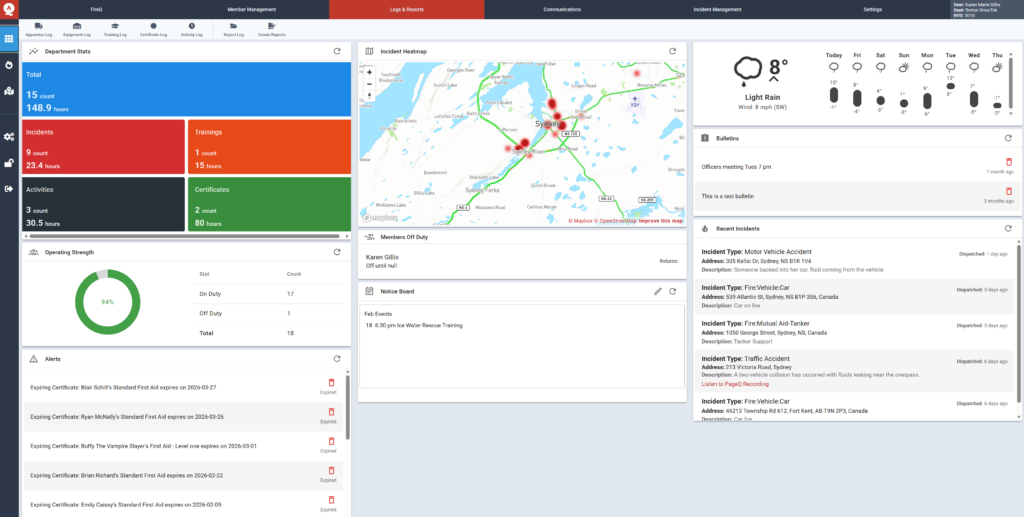
Reports can be generated quickly, ensuring that departments meet deadlines and maintain accurate documentation without sacrificing more of their precious time…and sanity.
Paperless Records Management for Fire Departments Give Faster Access to Critical Information
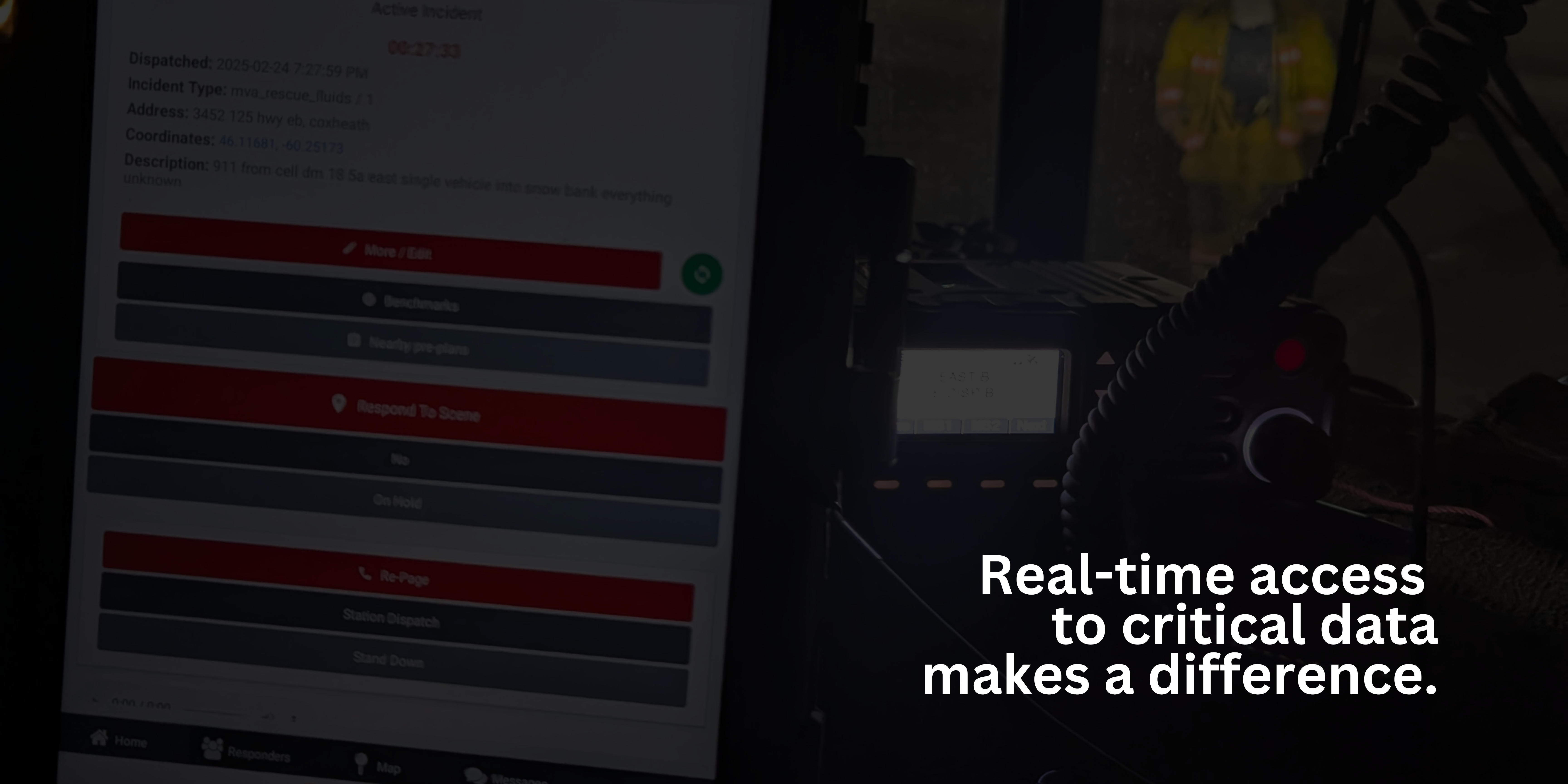
Perhaps most importantly, being able to access information is most valuable to firefighters when they are doing the actual work of firefighters. During emergencies, quick access to information can make a difference.
Digital records systems like FireQ allow departments to quickly retrieve:
- Previous incident reports.
- Firefighter availability and qualifications.
- Assets and hazards (on in the incident map).
- Hazardous material information.
- Pre-incident plans.
- Equipment records.
Instead of searching through filing cabinets, personnel can access records instantly from a computer or mobile device. This improves situational awareness and supports better decision-making both in the station and in the field.
Better Data for Planning and Decision Making
Fire departments collect valuable operational data every day. When records are stored digitally, this information can be analyzed to improve department performance.
Data insights can help departments:
- Identify high-risk areas in the community.
- Analyze response times.
- Evaluate staffing needs.
- Improve fire prevention strategies.
- Track inspection activity.
When these insights are available quickly and easily from paperless records management systems, fire chiefs and municipal leaders can make data-driven decisions that improve service delivery and community safety.
Paper systems make this type of analysis extremely difficult because information is scattered across multiple documents and locations.
Supporting the Modern Fire Service
Fire departments today operate in a highly demanding environment. In the modern fire service, fire departments are being called upon to do more and to respond to more and different types of emergencies. Emergency response, fire prevention, training, and administrative responsibilities all compete for limited time and resources.
Technology, through solutions like FireQ, is playing a growing role in helping departments manage these demands more efficiently.
Digital records management systems help modernize operations by:
- Centralizing department data.
- Reducing administrative workload.
- Improving reporting accuracy.
- Protecting critical documentation.
- Supporting better decision-making.
For many departments, transitioning away from paper records to paperless records management for fire departments is a key step toward building a more efficient and resilient fire service.
The Future of Fire Department Records Management
As communities grow and reporting requirements increase, the amount of data fire departments must manage will continue to expand. Departments that rely on paper systems may struggle to keep up with these demands. Digital solutions offer a scalable way to organize information, streamline reporting, and support long-term operational planning.